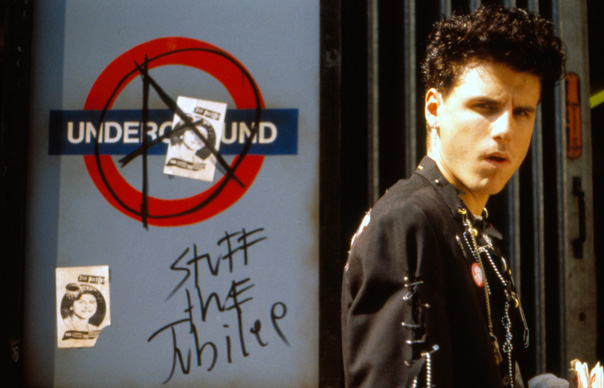
Watching this documentary was like taking a huge bite out of history. Julien Temple cleverly managed to compile striking and witty archive footage spanning over a century in the Capital, much like a fork full of food at a buffet. The film presented London in all of its dense, diverse and contradictory glory, beginning at the start of the 20th Century and following our metropolitan landscape through the ages. Black/white and bold colour imagery was paired with juxtaposing soundscapes and music from different eras and interviews were included with residents- past and present to showcase that whilst it seems to never stop raining here, London is a vibrant place.
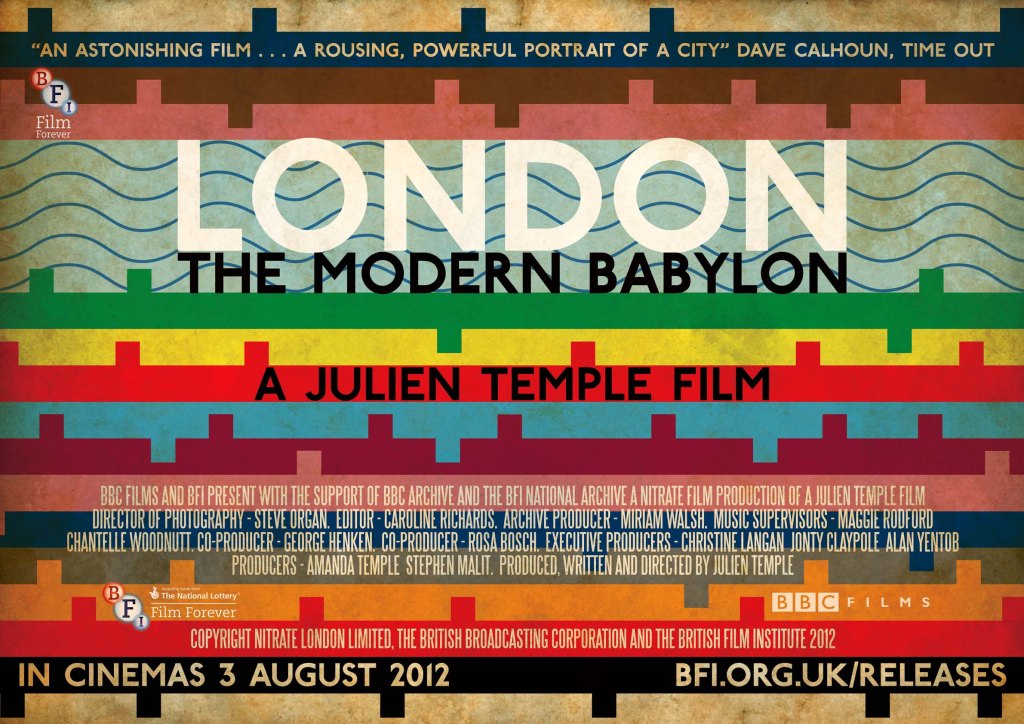
I first heard about ‘London – a modern babylon’ via BFI Player – the British film institutes version of All 4 – which includes a range of art house films and documentaries. I decided to buy a second hand copy of the film through ebay, as although I could have watched it online, I saw the purchase as a worthwhile investment for my film collection. I much prefer to attain physical copies of music and visual art as it provides my dislexic mind with a log of what I own rather than it being in a virtual library somewhere in the vortex of the WWW. I also particularly dislike the throw away culture in which our increasingly short attention spans mean we ditch new information quickly, moving on to the next trendy video that pops up before our eyes. I’ve liked Julien Temple’s films in the past, so thought ‘why not?’. I can rewatch and share it with friends and family for years to come if I enjoy it and take it to a charity shop if I don’t.
The ode to London’s colourful history includes endearing shots of kids playing with shrapnel in the aftermath of the Blitz, families building sandcastles on the ‘beach’ of the Thames next to London Bridge and misty 1950’s jazz clubs where black and white youths were brought together by common enjoyment for smoking, drinking and listening to good music. At one point Temple paired patriotic shots of Charles and Diana’s Royal Wedding in 1981 with The Brixton Riots of the same year, which emphasised this consistent mood throughout the documentary of paralleled pride and prejudice throughout British History.
The film successfully encapsulates the varied personalities of different areas and their developments through time. It highlights the concerns made by those who feel they have somewhat lost the essence of the Capital to modernity, privatisation and the yuppifying culture that came about with Thatcherism and continued to be developed whilst Tony Blair was Prime Minister- giving a timeline to the housing crisis as it stands today. However it also emphasises change as an important element of what London signifies in terms of its multiculturalism and as the melting pot it is for all walks of life. Change that hasn’t been met without resistance but has ultimately made London the wonderfully diverse metropolis it is today. From the prominent rise in the Jewish community in 1920s East London to the windrush generation and influx of Irish migrants and so on so forth. As Suggs from Ska band Madness so poignantly says when interviewed – “That’s the point of london .. there were no ‘good old days’. London doesn’t belong to anyone.. it’s whoever’s on the go at any given moment”.
Watch ‘London- The Modern Babylon’ online at https://player.bfi.org.uk/subscription/film/watch-london-the-modern-babylon-2012-online
 Everywhere is South of somewhere